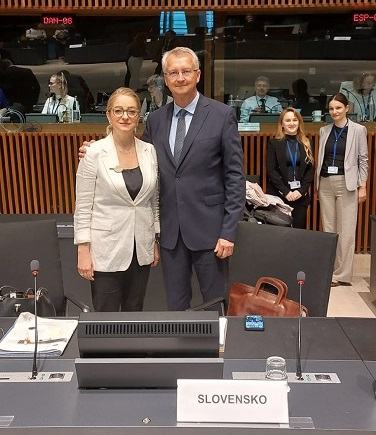
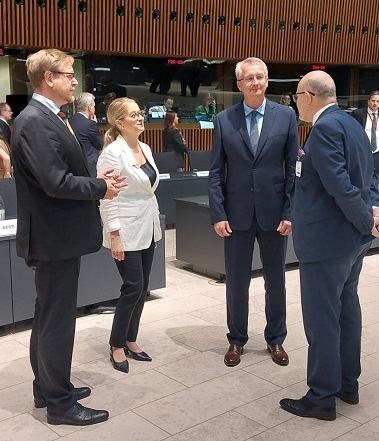
On 21 June, the State Secretary of the Ministry of Health Ladislav Slobodník participated in the meeting of the Council of Health Ministers EPSCO (Employment, Social Policy, Health and Consumer Affairs Council) in Luxembourg. The theme of the negotiations was the EU pharmaceutical package, access to healthcare, the issue of HPV and hepatitis B vaccination and other topics.
On the subject of medicines, State Secretary Ladislav Slobodík said: Predictability and transparency are key aspects of EU pharmaceutical policy. The transparency of data in the context of the lack of medicines is crucial in order to address the problem of parallel trade, which still persists in many countries including Slovakia.
The issue of lack of medicines was raised by the Slovak Republic as one of the Member States which supported an important initiative of the Czech Republic. It highlights the problem related to the EU solidarity mechanism, which aims to address the acute shortage of medicines in the EU. However, some Member States have introduced national measures which may run counter to the principle of solidarity and result in a secondary shortage of medicinal products by introducing inadequate stocks of medicinal products. We share the concerns of the Czech Republic, as we should avoid measures within the EU that are a solution for some but cause major problems for others. We hope that the principle of proportionality will be applied equally in this case and for the benefit of all EU patients, stated Ladislav Slobodník, State Secretary.
National representatives also discussed the incentive scheme under the proposed pharmaceutical package. In this context, a number of aspects such as predictability, transparency, legal certainty, competitiveness and affordability need to be addressed. The State Secretary stressed that access to medicines should not be subject to incentives but should be a standard rule for authorisation holders. We see added value in incentives such as new therapeutic indications and comparative studies based on scientific evidence.
Ministers also discussed the Council recommendations on vaccination to prevent and reduce cancer risks associated with HPV (human papillomavirus) and HBV (hepatitis B virus) infections by increasing vaccination rates.