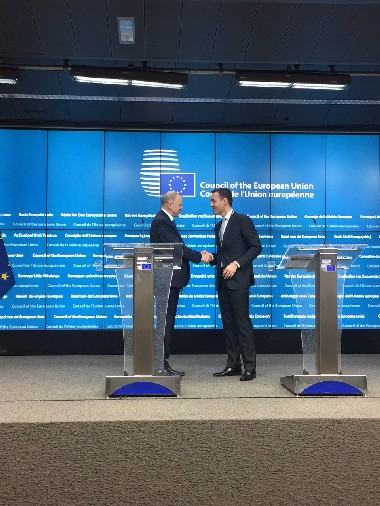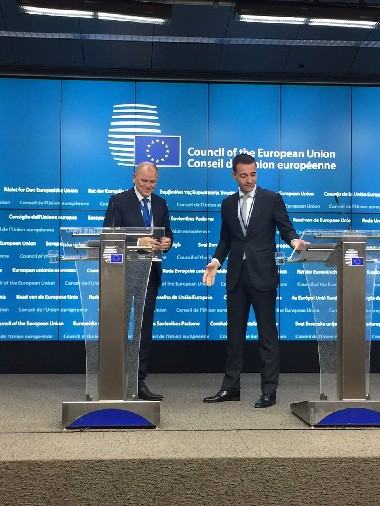
Minister for Health On Thursday, 8 December in Brussels, Tomáš Drucker chaired a meeting of the Council of Health Ministers of the EU (EPSCO), which took stock of the six-month Slovak Health Presidency of the Council of the European Union.
At the beginning of the debate, health ministers in Brussels discussed the Annual Growth Survey, which provides an overview of economic and fiscal policy priorities in 2017. I am convinced that we all share the objective of achieving the sustainability of health systems, stated the Slovak Minister for Health. In addition, the Council of Ministers discussed several issues such as the state of health in the EU, antimicrobial resistance, the WHO Framework Convention on Tobacco Control and others.
The Slovak Minister for Health, Tomáš Drucker, evaluated our presidency in the Council of the EU in the field of health. In the health field, the Ministry of Health of the Slovak Republic organized three Presidency Conferences, the Informal Council of Health Ministers and a number of professional chairing events. Summary by the Minister of Health, Tomáš Drucker.
In September, the conference focused on chronic non-communicable diseases and healthy lifestyles in Bratislava to promote a common strategy for the prevention of these diseases, the occurrence of which is increasing significantly worldwide. This included a debate on improving food products, in particular on saturated fats, trans-fatty acids, sugars and salts.
Slovakia followed the Dutch Presidency's discussion on the availability of innovative and affordable medicines for patients by organising a conference on the lack of medicines. It focused on the lack of medicines due to parallel trade, production failures and high prices of innovative medicines. It was also discussed whether the medicinal product should be considered as a commodity. The lack of availability of medicinal products should be seen in a number of respects, including as regards the availability of innovative medicinal products. The situation with missing medicines can also be improved by establishing a common information database on missing medicines, said the head of the Slovak health department T. Drucker. Ministers agreed that the supply of medicines is crucial for each Member State.
Following the Luxembourg Presidency, Slovakia also organised a conference on Azheimer's disease, which provided a good opportunity to unite people from different areas of expertise to address key scientific, health and social aspects of the disease.
During the informal meeting of health ministers held in Bratislava in October, political leaders supported the Presidency's proposal for a framework for EU policies on tuberculosis, HIV/AIDS and hepatitis B and C, which would explore opportunities for political dialogue and cross-border cooperation. Ministers also supported the importance of addressing the problem of drug shortages, in particular by encouraging voluntary cooperation in the field of information exchange, or by joint negotiations on drug prices. Together, we have sought solutions within the framework of the rules on the free movement of goods in the EU that would eliminate the outages of vaccine supply in some Member States, said Health Minister T. Drucker. Ministers also discussed the issue of vaccination, which is considered to be one of the most effective means of preventing the spread of communicable diseases worldwide. Ministers also addressed the issue of strengthening best and best practice in improving food.
After Slovakia, Malta takes over the Presidency of the Council of the European Union.