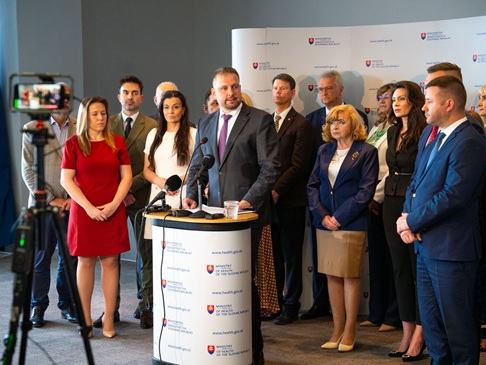
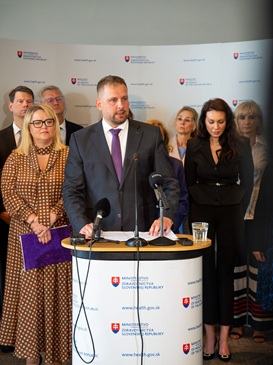
Minister of Health Kamil Šaško presented a new drug reform approved today by the government of the Slovak Republic. The new legislation will ensure the availability of treatment for patients, whether it sets clear rules for the approval of new medicines. The new law introduces patients' entitlement to medicines for exemption, increases the availability of innovative medical devices, tailor-made medical devices and dietetic foods, while at the same time strengthening control over the trade in medicines and forgery of prescriptions.
The new drug reform now awaits the standard legislative process in the National Council of the Slovak Republic. We are finally giving the policy of medicine a stable and conceptual basis today. We are building a system that will serve the patient no matter who sits in the ministerial chair in five, ten or fifteen years. Slovak health deserves continuity. The Slovak patient deserves to be sure. Slovak medicines should remain for Slovak patients. Since December, when I first introduced you to the drug seven, we've come a long way. And it wasn't an easy road, said Minister of Health Kamil Šaško. The department's management and experts met a total of 56 times with representatives of the health sector - patient organisations, health insurance companies, professional organisations, representatives of the pharmaceutical sector, parliamentarians, representatives of the finance department, self-governing regions, hospitals, the Health Care Supervisory Authority, the Public Protection Office and others. As a result of these negotiations, the proposal has gone through a wide public debate, a technical opposition and a broad interministerial commentary procedure.
The new drug legislation brings the following seven key changes:
1.We are introducing clear rules for the approval of new medicines, setting clear procedural deadlines and conditions for the market entry of medicines, medical devices and dietetics, as well as transparent information on them.
2. More new medicines and easier access to medicines for children and patients with severe diseases.
- we are willing to pay more for modern treatment for those who need it most
- new ways of entering new medicines, following the Czech Republic model
- higher threshold values for paediatric indication medicinal products
- new parameters for the entry of medicinal products with significant clinical benefit and conditional registration accelerated and simplified for at least 3 years
3. We introduce a patient's entitlement to medicines for exemption and clear rules on how to get medicines, including health insurance obligations
- We have completely redesigned the exceptional payment mechanism, introducing the patient's entitlement
- Strengthening Our Competences Health Care Supervisory Authority as Audit Authority
- canceling the financial limit
4.We facilitate the entry of innovative medical devices and dietetic foods with balanced nutritional composition will also be covered.
- gluten-free and low protein pasta and bread will again be covered by public health insurance
5.We ensure the availability and retention of medicines on the Slovak market, on which patients are dependent.
- For the first time in the law, we simply make it possible to call for the prices of generics and biosimilators to be increased - so that these medicines do not leave our market
6.Fight against reexport - we strengthen control of drug trafficking and forgery of recipes so that medicines intended for Slovak patients remain in Slovakia.
- We strengthen control over the legal movement of medicines, we specify the rules of extraordinary ordering
- We impose an obligation on pharmacies to ensure that the non-issued medicinal product is sold back to the wholesaler and the marketing authorisation holder.
- Large distributors and registration holders will have clearer rules to reject suspicious orders
- introducing penalties for infringements so that the rules are clear and enforceable
- tougher penalties for counterfeiting recipes
7.We introduce the concept of treatment certainty - the patient must not remain without his treatment - the registration holder will have an obligation to treat patients.
- patients should never be treated again daily for commercial calculations