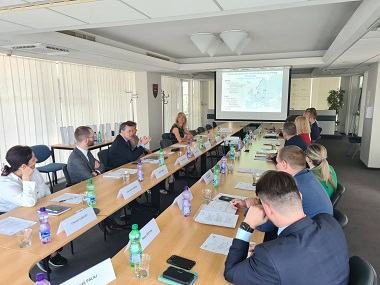
Scientists from the International Cancer Research Agency (IARC) launched the project to improve coordination and screening of cancer care in Latvia and Slovakia (ICCCS) as part of a joint initiative with the European Commission and national health ministries to support efforts to control cancer. The objective of the ICCCS project, which is in line with the European Plan against Cancer, is to develop strategic plans and roadmaps in cooperation with national partners to help reduce cancer mortality in Latvia and Slovakia. Particular attention will be paid to building capacity on population cancer registries, improving the information systems used to identify and invite beneficiaries for screening, and establishing a framework for monitoring cancer screening programmes. The European Cancer Plan aims to ensure that each country ensures that more than 90% of the eligible population has access to quality screening of breast, cervical and colorectal cancer and that more than 90% of cancer patients have access to complex cancer centres. In addition, the European Cancer Plan stresses that each country should strengthen cancer registration in order to allow for monitoring trends and national cancer burden. Representatives of the international agency are from today on a working visit to Slovakia, already in the morning visited the Ministry of Health of the Slovak Republic, where they were met by State Secretary Róbert Babeľa, State Secretary of the Slovak Republic Lenka Dunajová Družkovská and other representatives of the Ministry. State Secretary of MZ SR R. Babeľ welcomed the guests with the words: For this reason, I am very pleased to welcome you here today, and I hope that we will start fruitful cooperation for the benefit of our citizens. It also noted that Slovakia is adopting a National Cancer Programme, which is a plan for public health, healthcare and patient safety, which aims to reduce cancer incidence and mortality and improve the quality of life of cancer patients by systematically and fairly implementing prevention, diagnosis and evidence-based treatments.
The effective cancer screening programmes and high-quality cancer registration are two fundamental and complementary aspects of effective cancer control policies that this project will focus on, said Dr. Andre Carvalho, ICCCS Project Coordinator. The screening programmes help save lives by identifying tumours at an early stage. Data collection through high quality cancer registration is also essential for effective cancer control policies and epidemiological research. These data form the basis for planning public health programmes to prevent cancer and improve patient care.
The representatives of the agency have a rich programme during the two-day visit, currently located in the National Cancer Institute, then visit the Oncological Institute of St. Elizabeth in Bratislava. Tomorrow's programme will be launched at the National Health Information Centre and in the afternoon, together with representatives of patient organisations, will address the topic of communication and promotion of screenings. ICCCS project, supported by the European Union Technical Support Facility (TSI) and implemented in cooperation with the European Commission Directorate-General for Structural Reform (DG REFORM), is a cooperation between national and international experts to develop strategic plans to improve participation and reduce inequalities in cancer screening. The project in Slovakia will address the challenges identified by the Ministry of Health and other key stakeholders and will help to reform the infrastructure and health care services, with a particular focus on improving the information system used to identify and invite the population eligible for screening, thereby creating a framework for regular data collection to monitor cancer screening programmes. The project will also provide a strategy for a communication campaign to raise awareness of the importance of screening as cancer prevention.
A European cancer plan
The ICCCS project is in line with the European Plan to Combat Cancer, which sets for each country the objective of ensuring that more than 90% of eligible policyholders have access to quality screening of breast, cervical and colorectal cancer. In addition, the European Plan to Combat Cancer stresses that each country should strengthen cancer registration in order to allow monitoring of national cancer burden in the population and changing trends.
IARC
The International Agency for Research on Cancer (IARC), a specialised agency of the World Health Organisation (WHO), supports international cooperation in cancer research on cancer prevention and control. The IARC supports countries around the world and helps them develop and implement strategic plans for cancer control. In this framework, IARC launched the Improving Cancer Care Coordination and Screening in Latvia and Slovakia (ICCCS) project as part of a joint initiative with the European Commission and the relevant national health ministries to support cancer control in Eastern Europe.
The ICCCS project aims to develop strategic plans and plans in cooperation with national partners to help reduce cancer mortality in Latvia and Slovakia.