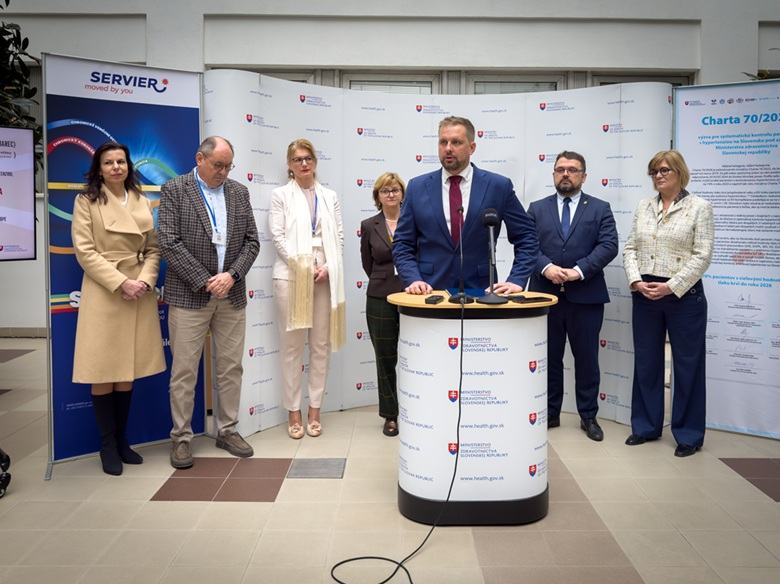
In Slovakia, millions of unclaimed drugs remain in pharmacies every year. Just last year, patients didn't take up 3 470 818 recipes. Paradoxically, we visit a doctor almost twice as often as the OECD average - on average up to 11 times a year. Experts warn: the problem is not access to healthcare, but that patients do not comply with treatment.
On the occasion of World Adherence Day (27 March) The Ministry of Health of the Slovak Republic, together with experts, points out that the low adherence to treatment is therefore one of the greatest silent threats of modern health. In Europe, it can relate to up to 200 thousand unnecessary deaths per year.
–The fact that patients do not pick up millions of prescription drugs each year is a serious signal that access to healthcare alone is not enough. If the patient fails to comply with the treatment, it endangers his health and at the same time increases the pressure on the entire health system. Each unrestrained recipe and any arbitrary interruption of treatment implies an increased risk of complications and hospitalisation. Just as I consider it crucial to prevent, because it protects our health, so no less important is to follow the set-up of treatment,Kamil Šaško, Minister for Health, said.
Every other patient fails treatment
Adherence is compliance with the treatment regimen, including correct use of medications, medical advice, regimen measures such as diet, exercise and regular medical check-ups. It ensures the effectiveness of treatment, leads to better control of chronic diseases, less symptoms and less risk of complications. However, every other patient with hypertension, diabetes or chronic venous disease does not comply with treatment. –In cardiovascular diseases, the problem is particularly important because regular treatment can prevent heart attacks, strokes or heart failure, warns chief expert of MZ SR for general medicine MUDr. Etela Janeková. Up to 84% of patients have a history of hypertension following a heart attack or stroke.
The most expensive medicine is the one that the patient does not take
One of the most effective solutions to increase adherence is to simplify treatment. Modern fixed combinations allow for example to treat hypertension and dyslipidaemia with one tablet per day. We can treat it this way today 90% hypertonics. Our ambition is to reach the target pressure by 2028 at least 70% patientsMUDr. Monika Kulinová, President of the Slovak Hypertension Society. These medicines can reduce the risk of hospitalisation by 37%. However, the biggest obstacle often remains the patient himself, who will arbitrarily discontinue treatment when it begins to feel better. The consequences of lack of treatment are also manifested in the long term. Uncontrolled blood pressure increases the risk of dementia. If hypertension is captured in time and properly treated at middle age, we can also reduce the risk of dementia in older people.– doc. MUDr. Eva Goncalvesová, CSc., FESC, FHFA - head of the Cardiology Clinic LF UK and NÚSCH, a.s.
Pharmacist, nurse and patient: cooperation decides
Improving adherence requires the cooperation of the whole system. Pharmacies also play an important role. –As early as 2003, the World Health Organisation pointed out that around half of patients with chronic diseases did not comply with treatment, and at the same time clearly referred to the role of the pharmacist in improving understanding of therapy. Today, systematic surveys show that pharmaceutical interventions can improve adherence in around 70% of cases;The president of the Slovak Pharmacy Chamber PharmDr. Ondrej Skull.